Skip to content
Bodynamic
Humanity
Give

Stories the numbers can’t tell.

Behind every figure is a body that learned to live again. Two of the people we have worked with, in their own words, shared with their permission.
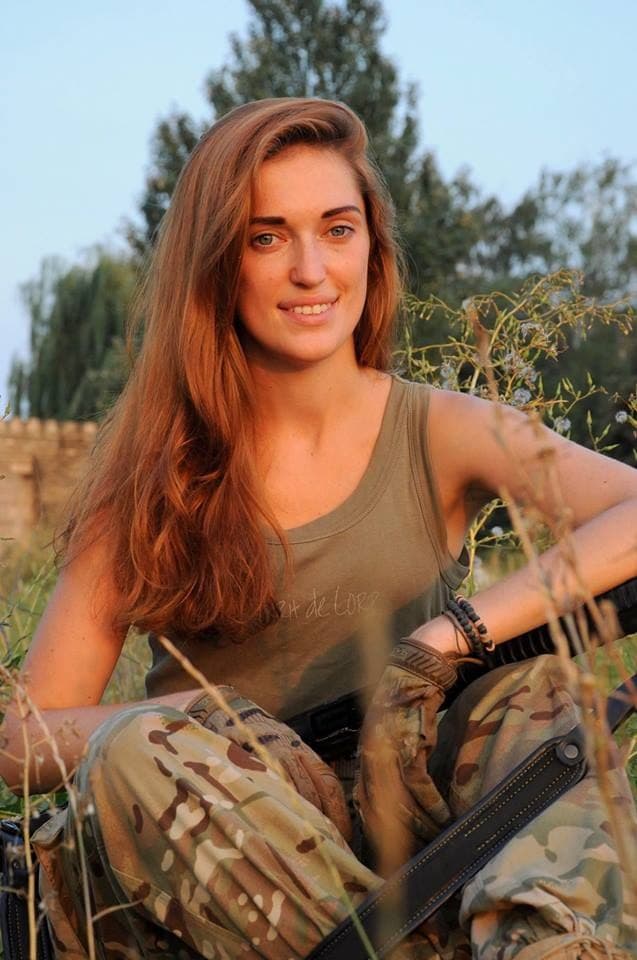
Portrait of Kateryna Podzizey.

Kateryna Podzizey

Combat medic and volunteer, Ukraine

“The war changed me. It is not good and not bad. It is just a fact — now I need to accept this new me.”

It started on Maidan in 2013, on her 21st birthday. By March, Kateryna knew her life had split into a before and an after. When the war began, going to the front was not a question. Her younger brother, barely 18, went first. She and her chosen sister finished tactical medicine training and followed.

Then came the contrasts: bombardment at night, coffee and laughter by day. Driving the wounded to Mariupol in the dark, jumping rope in combat boots between shifts. Learning to tell their fire from the enemy’s. Carrying the coffin of a friend she had known since Maidan — and the next morning, eating grilled chicken in the same ambulance.

She came home to exams, a diploma, a new job, a new love. And the slow, frightening realisation that the woman who came back was not the woman who left. “I started to think that some things were normal that are not normal and cannot be normal.”

At the Equal to Equal training she could not answer a simple question: who am I now? Across four modules and eight months of body-based work, she found ground beneath that question. Today she meets people without hostility, accepts that they can disagree, and moves through her life with intention instead of chaos.

“After the war” has not begun yet, she says — not while her unit is still burying six people a month. “But I am alive.”

Where they are now

From chaotic survival to a life with direction.
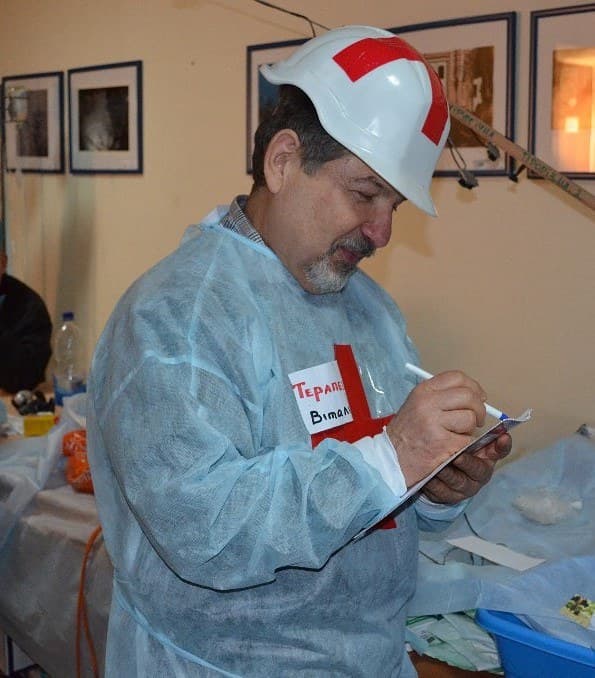
Portrait of Vitaliy Kabashniuk.

Vitaliy Kabashniuk

Therapist and medic, Maidan first-aid post

“An old lecturer is crying, talking about psychogenic self-regulation, and cannot get a hold of himself in front of so many students. Suddenly one of them stood up and clapped.”

Vitaliy “became sick” on 23 February 2014, around 10 a.m., when the most dramatic Maidan events were already over. Twenty-five years of medical experience had not prepared him for the endless stream of patients at the first-aid post on the corner of Prorizna and Khreshchatyk, opened in place of the burnt-down Trade Union Building. On his white coat was a handmade tag that read only “Vitaliy, therapist”.

The Ministries of Health and Education had forbidden doctors and teachers from taking part. He was the only therapist on his shift, and the Medical National Resistance Office also asked him to be the psychologist for his colleagues. Acute pneumonias, decompensated chronic illness, suspected tuberculosis, suspected cancer — patients refused to leave, asking only for a pill for relief. They called him Father, Brother, Mister Professor.

Outwardly he was kind, gentle, smiling softly. Inwardly there was a lump in his throat he was afraid would break. When the shift finally ended, the team simply said thank you and dissolved into the city. Halfway down Shevchenko Boulevard he ran into the bushes and cried for half an hour. He cried again in St Volodymyr’s Cathedral. He cried a third time on the night train, a towel over his face.

The attacks would not stop — at the national anthem, at “Plyve Kacha”, at any reminder. Mid-lecture, in front of his students, he broke down trying to talk about psychogenic self-regulation. One student, a Maidan veteran, stood up and clapped. The whole class followed. He was so surprised he stopped crying.

Sedatives did not work. Returning to the first-aid post made it worse. The way through came elsewhere: a new first-aid course for volunteers, a degree in practical psychology, trips to the eastern front as a tactical medicine instructor — and finding Bodynamic and Ditte Marcher, which brought him into a circle of like-minded colleagues.

During the training his condition improved markedly. A throat spasm returned only once, in the third module, when he went deeper into the crisis moments of his life. Today he cries rarely, and the people around him do not notice. He stays in control of his state whatever the day brings, and he makes the key decisions clearly.

Where they are now

From uncontrollable spasms to steady professional ground.

Be part of the next story.

Your support pays for the trauma work behind every recovery on this page.