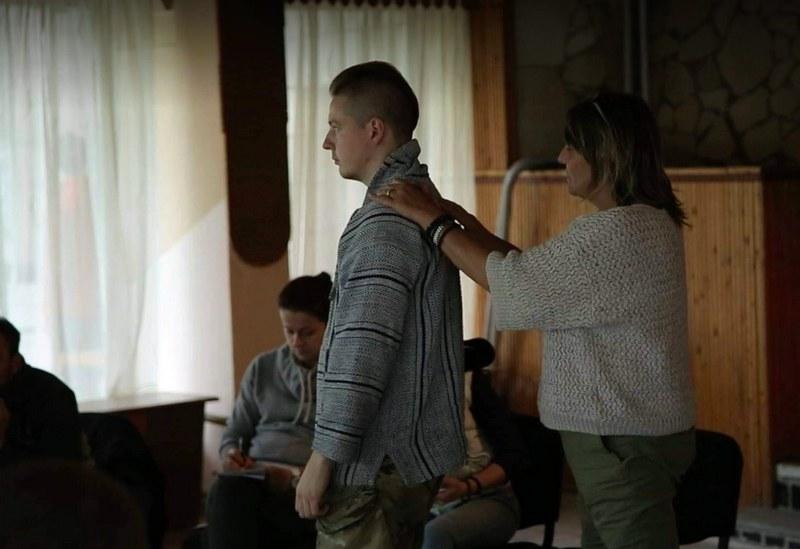
Trauma is held in the body. That is where we start.
In crisis and prolonged stress, what gives way first is rarely insight. It is regulation, bodily awareness, boundaries, energy and the ability to stay in contact with other people.
Those capacities can be worked with directly, and they can be taught. That is the whole premise of what we do, and the reason the work can be handed to local practitioners rather than imported indefinitely.
Three ways of being a self
Bodynamic describes the self through three functions. Naming them matters in the field, because it tells a practitioner which one is offline and what to do about it.
Body ego
The sense of self that is built from bodily experience: weight, breath, muscle, movement. Under sustained threat this is the part that goes quiet, and people describe feeling numb, unreal or far away from themselves.
Observing ego
The capacity to notice your own experience while you are having it, without being swept away by it. It is what allows a person to work with a memory rather than relive it, and it is trainable.
Role ego
The self as it functions in roles and relationships: soldier, medic, parent, colleague. War both demands roles and strips them, and much of recovery is about moving between them again by choice.
What we actually train
Five capacities, worked through the body rather than talked about. No equipment, and nothing that depends on a quiet room or a working clinic.
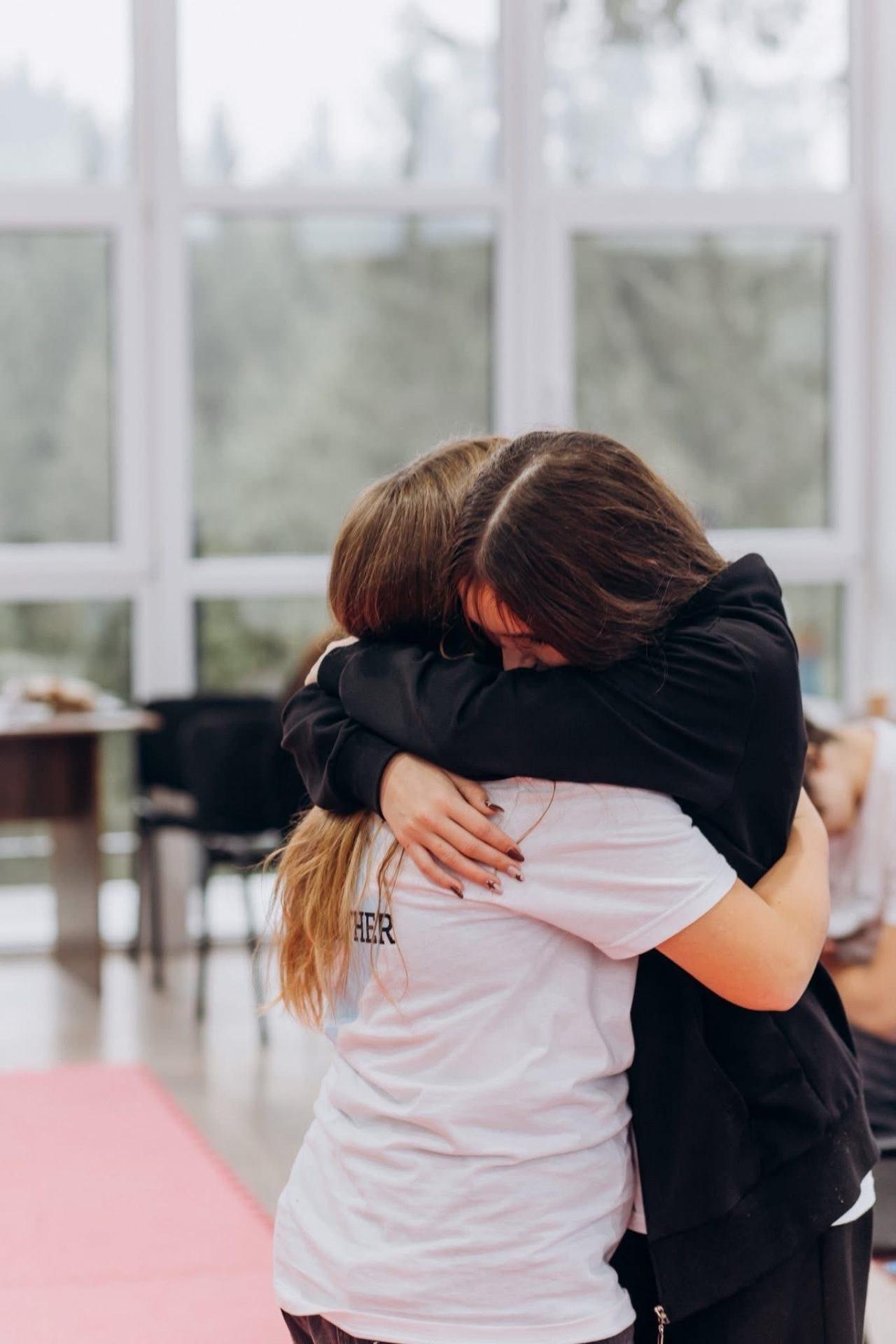
Centering
Contact with your own centre: a sense of self that holds its shape under pressure instead of collapsing or hardening.
Grounding and reality testing
Weight, support underfoot, and the ability to check what you feel against what is actually happening now. This is the difference between a memory and a present danger.
Boundaries
A felt sense of where you end and another person begins, and the ability to say yes and no. It is often the first thing violence takes and the first thing worth rebuilding.
Energy management
Noticing arousal rise and fall, and learning to regulate it rather than be carried by it. Practically: sleeping, stopping, and not running at full alert for months.
Connection
Contact with another person without losing yourself in them. Isolation is one of the most reliable predictors of a bad outcome after trauma, and connection is a resource that can be rebuilt.
Why it travels
Body-based work can reduce the reliance on detailed verbal narration and specialist premises. It can be adapted for a shelter, a rehabilitation centre, a basement or a field, in groups, by someone who lives there.
It asks people to do something rather than to narrate what happened to them, which matters where re-telling is unsafe or simply unbearable, and where the person in front of you may have to go back to the front tomorrow.
Our work is trauma-informed, culturally sensitive and adapted to the context, needs and capacities of the people and communities we serve.
Our programmes
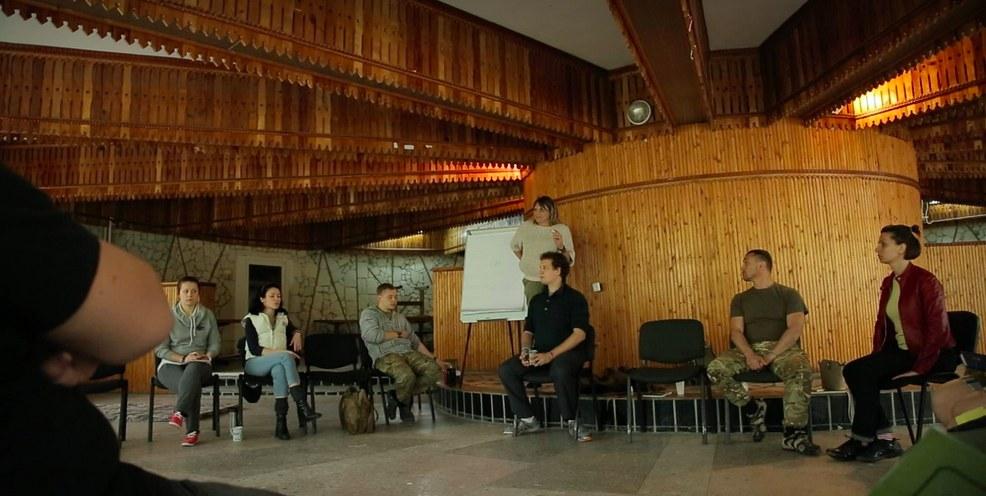
We develop and run psychosocial initiatives with local partners and qualified professionals, in five areas.
Crisis and trauma support
Structured, trauma-informed, body-oriented psychosocial support for people affected by conflict, humanitarian emergencies and prolonged adversity.
Support for humanitarian and frontline workers
Work on the psychological well-being, self-regulation and resilience of the professionals operating in demanding environments, who are usually last in the queue for care.
Local capacity building
Professional training, supervision, knowledge sharing and collaboration with qualified local psychosocial practitioners.
Digital psychosocial support
Accessible online programmes and workshops that reach people and professionals in dispersed or crisis-affected areas.
Research, monitoring and evaluation
Responsible evaluation and further development of Bodynamic-based psychosocial interventions in humanitarian contexts.
The method itself is developed and taught by Bodynamic International. How the two organisations relate.
Train one practitioner, reach everyone they treat.
A monthly gift pays for the trainings that leave the work in local hands.