Fund work that is built to be handed over.
Good funding should leave capacity behind. Every project combines care now with local capability that can remain after the funding stops.
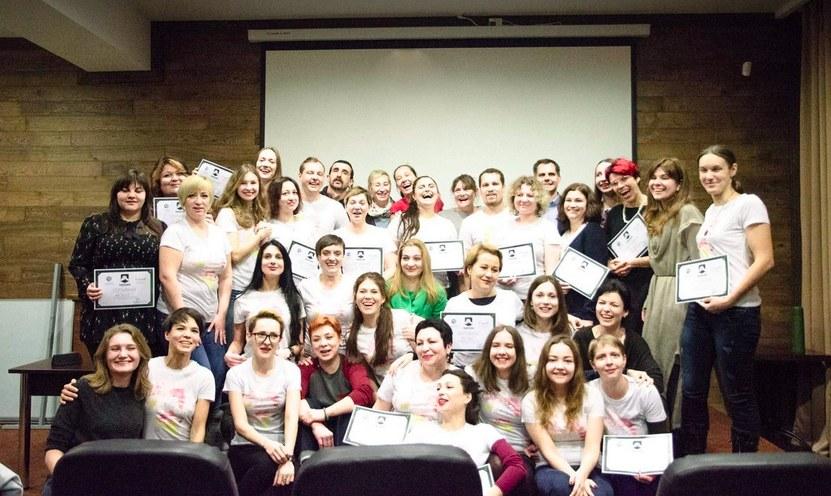
Our model centres trained local practitioners rather than a permanent imported team. A grant can keep producing value after a training cycle because local practitioners continue the work.
It also gives each programme a clear route to local ownership. When Ukrainian clinicians can run Ukrainian trainings themselves, the model has done what it was designed to do.
In short
- Body-based trauma care and training, in war and crisis.
- Work in Ukraine since 2006, now Ukrainian-led.
- Method developed and quality-assured by Bodynamic International.
What we have already done
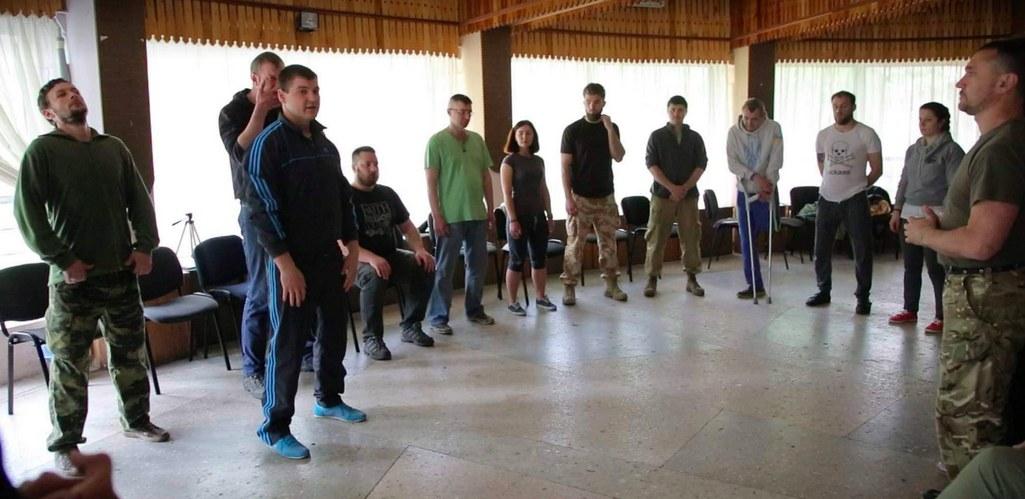
Bodynamic has worked in Ukraine since 2006, first training clinicians and, from 2014, turning to the people coming home from the front. The first training built for veterans filled with 28 people.
When the full-scale invasion began in 2022, the network built over fifteen years was already in place. That allowed the response to be fast and locally led rather than built from scratch.
A preliminary report followed the first two veteran groups. In Group 1.0, severe trauma symptoms fell from 40% to 8% between the second and fourth modules.
Where funding would go next
Three places, at three very different stages. We have described each one as it actually stands.
Active since 2006
Ukraine
Long-running work: veteran programmes, clinician training, work with families, and Equal to Equal trainings that keep the network growing. Funding here buys depth and continuity rather than a start-up.
- Multi-year training cycles
- Practitioner stipends
- Monitoring and evaluation
Talking to partners
Middle East
Gaza, Syria and the refugee routes across the region. We are identifying the local clinicians and humanitarian partners to begin with. Funding here is seed funding, and it is the stage where a committed partner shapes the design.
- Partner scoping
- A first training cohort
- Adaptation of material
Listening
Africa
Conflict-affected regions face a heavy and under-resourced burden of trauma. We are mapping needs and potential local partners, and will only define a programme once that groundwork is in place.
- Needs assessment
- Local partner mapping
How we work with local organisations
We do not set up a parallel structure. We work through organisations that are already trusted where they operate, and the practitioners we train stay employed by them, not by us.
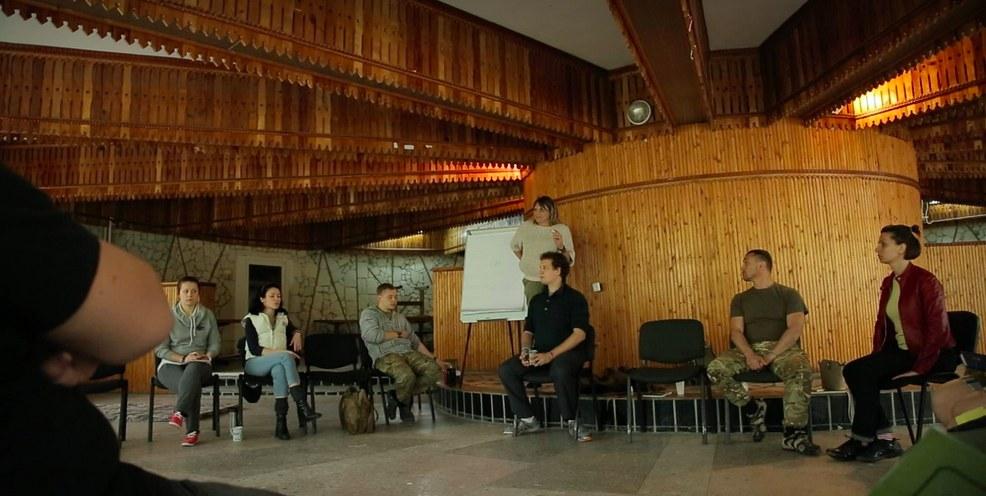
In Ukraine that has meant working alongside Raise.UA, the Ukrainian Canadian Advocacy Group, Veteran Hub and the Armed Forces of Ukraine, with the Heart of the Warrior rehabilitation centre in Kharkiv running programmes staffed by graduates of our trainings.
For a funder this means fewer new entities to assess, and a delivery chain that already has local accountability in it.
Money and project management
We are small enough for a funder to see the whole chain from gift to training, and we intend to keep it that way.
- Field programmesTrauma care and deployments
- Training local cliniciansCapacity that stays
- OperationsAdmin, accounts, audit
The exact split will be published once it has been confirmed from the accounts.
Due diligence
We are preparing a standard due-diligence pack covering the documents below. Contact us for current availability.
- Registration and statutes
- Most recent annual accounts
- Board and governance structure
- Safeguarding and ethics policy
- GDPR and data-protection practice
- Programme reporting from Ukraine
- Partner agreements and references
Online gifts are disabled while this site is in preview. Registration details and governance are set out on the governance page.
Ways to work with us
- Institutional grantsCISU, EU instruments, trusts and foundations. We can work to a logframe, report against indicators, and take part in joint applications with a lead partner.contact@bodynamicwithoutborders.org
- Partnership deliveryNGOs and clinical organisations who want body-based psychosocial capacity inside an existing programme, rather than a separate project.contact@bodynamicwithoutborders.org
- Professional contributionTrainers, supervisors, translators and evaluators. Capacity in kind is often worth more to us than its cash value.contact@bodynamicwithoutborders.org
- Major and corporate givingLarger single gifts, usually designated for a training cycle with clear reporting on what the funding made possible.contact@bodynamicwithoutborders.org
Start with a conversation, not a form.
Tell us what you fund and where, and we will tell you honestly whether we are the right partner for it. If we are not, we will usually know someone who is.